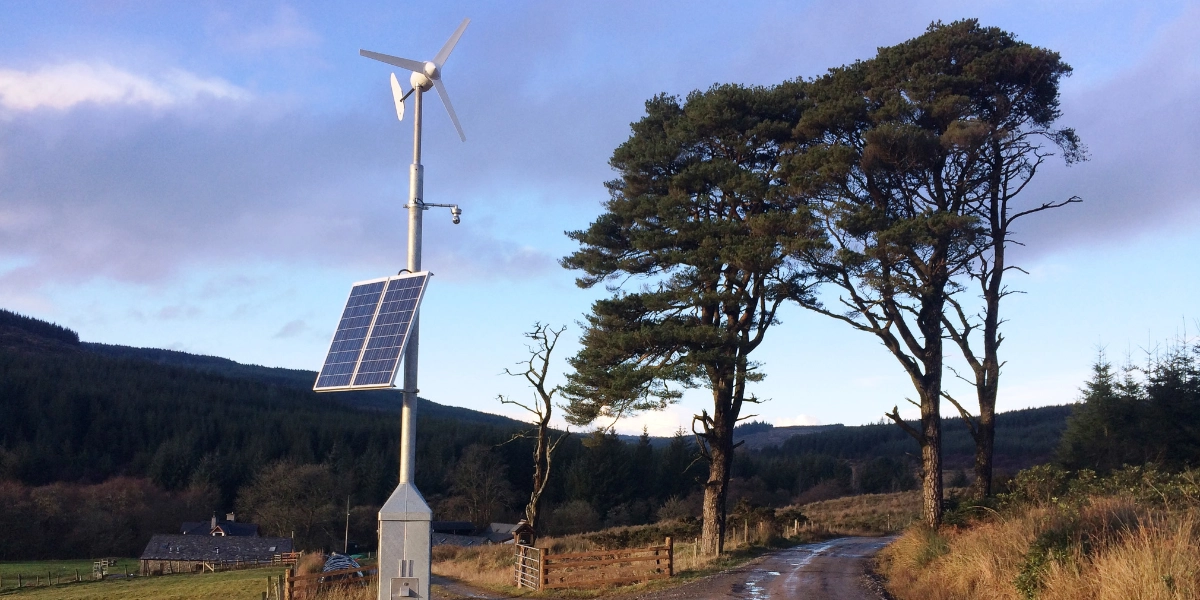
Across the UK and overseas, demand for small, reliable off-grid power systems is increasing. Organisations are collecting more information from remote sites, including locations where a connection to the electricity grid is unavailable, disruptive or too expensive.
These applications include remote CCTV cameras monitoring car parks and infrastructure, sensors measuring river water quality, flood detection systems, remote weather stations and equipment protecting valuable assets in the field. Off-grid renewable energy is also supporting telemetry, communications equipment and remote internet connections.
Although these technologies perform different tasks, they all depend on one essential requirement: reliable power.
“We are seeing a large increase in the potential deployment of small off-grid energy systems around the UK and overseas. This is being driven by the need for data from remote sites away from traditional energy supplies.”
Stuart James, Sales Director at Marlec Engineering
Marlec designs and supplies solar, wind and hybrid renewable power systems for remote sites. By considering the equipment’s energy consumption, the installation environment and the required battery autonomy, our engineers can develop a practical power system around each application.
More data with lower power consumption
One of the most important developments in remote monitoring is the reduction in the amount of energy required by modern electronic equipment.
Cameras, sensors, monitors and communications devices can now collect and transmit large amounts of useful information while consuming relatively little power. Some applications also use artificial intelligence to analyse information, recognise patterns or alert operators when attention is required.
This creates new opportunities for renewable power.
“The use of low-powered cameras, monitors and sensors, including equipment using AI, can now provide our customers with a huge amount of data while consuming so little energy that it can be reliably operated from a well-engineered renewable power source.”
Stuart James, Sales Director at Marlec Engineering
Around 15 years ago, running a high-quality CCTV system entirely off-grid could be difficult because the cameras and associated communications equipment had relatively high power requirements. Providing enough renewable generation and battery capacity could make the system large, expensive or impractical.
Advances in camera and sensor technology have changed this. Modern equipment can often achieve much more while using considerably less energy. A system that once required mains electricity may now be supported by a carefully designed combination of solar panels, a windcharger, battery storage and suitable control equipment.
The engineering challenge has not disappeared. The system still needs to account for the site, equipment load, seasonal conditions and required operating time. However, the range of applications that can now be powered away from the grid is far greater than it was in the past.
Why use renewable power at a remote site?
Connecting an isolated location to the electricity grid can require trenching, cabling, permissions and considerable investment. In some places, a grid connection may not be possible.
Batteries alone can provide temporary power, but they must eventually be recharged or replaced. This can mean frequent maintenance visits, particularly when equipment is installed in a distant or difficult location. Generators require fuel and servicing, while also producing noise and emissions.
A properly designed remote power supply generates energy at the point where it is needed. Solar panels, windchargers or a combination of both can charge batteries that continue to power the connected equipment when immediate renewable generation is unavailable.
For organisations and system integrators, this can offer several practical advantages:
- Greater freedom when selecting an installation location
- Less disruption than installing a mains power connection
- Reduced dependence on battery replacement and generator refuelling
- Faster deployment for suitable projects
- Lower ongoing site maintenance
- Support for permanent, temporary and rapidly deployed equipment
- Access to locations that were previously too difficult or costly to serve
Most importantly, the availability of grid electricity no longer has to determine where the monitoring equipment is installed.
“The power supply no longer has to dictate the location. The technology can go where it is needed.”
Stuart James, Sales Director at Marlec Engineering
Designing an off-grid power system around the application
Customers are not simply looking for a solar panel, battery or small wind turbine. They need a dependable solution to a specific problem.
A customer may know that they need to monitor a remote river, protect equipment in the field or provide internet connectivity at an isolated site. What they may not know is how much renewable generation and battery storage will be required to keep that equipment running throughout the year.
This is where experience in off-grid system design becomes important.
“We have learnt that our clients want a reliable partner who can supply a bespoke renewable energy power system based on their individual needs. Our engineers can design this using our depth of wind and solar power experience and understanding.”
Stuart James, Sales Director at Marlec Engineering
A reliable renewable power system must be designed around the equipment and its operating environment. Simply selecting a solar panel or windcharger without understanding the complete application can result in poor performance, especially during winter or prolonged periods of difficult weather.
When assessing a remote power project, Marlec considers factors such as:
- The operating voltage of the equipment
- Average and peak power consumption
- The number of operating hours each day
- The proposed installation location
- Available sunlight and wind conditions
- Buildings, trees and other possible obstructions
- Seasonal changes in renewable generation
- The required battery autonomy
- Available installation space
- Whether the equipment is critical
- Future expansion or additional equipment
By understanding these requirements, our engineers can recommend a suitable combination of renewable generation, charge control and battery storage.
The final solution could be a solar panel for a low-energy application, a Rutland Windcharger for a suitable wind site or a hybrid wind and solar system. Marlec can also provide a more complete plug-and-play system to simplify installation in the field.
Solar, wind or hybrid off-grid power?
There is no single system suitable for every remote monitoring application.
Off-grid solar power
Solar power is often considered where the site has an unobstructed position and the connected equipment has a predictable energy demand. High-efficiency solar panels can generate useful energy from a compact footprint, which is valuable when space, transport and installation time are limited.
Marlec’s latest Spectra solar panels use high-efficiency HPBC cell technology. This allows them to provide more power from a smaller panel area than many traditional panel designs, making them well suited to selected remote monitoring and professional applications.
Small wind turbines
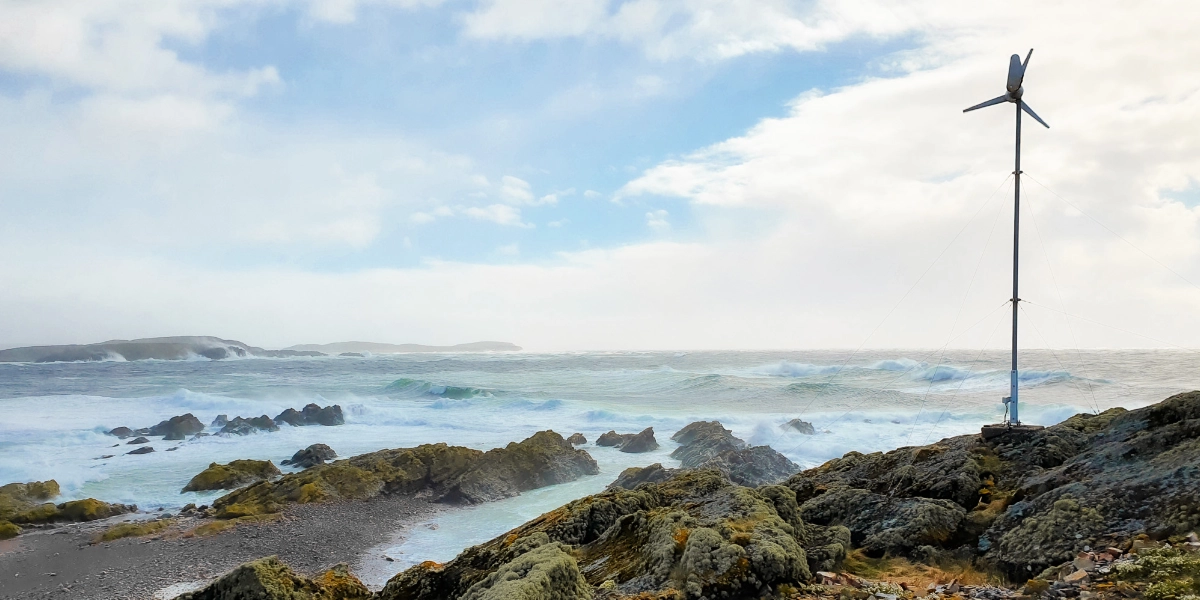
Wind power can offer an advantage at exposed locations with a suitable wind resource. Unlike solar panels, a windcharger can generate energy during the day or night whenever there is sufficient wind.
The Rutland 1200 Terrain Windcharger has been developed specifically for land-based off-grid applications. Available in 12V, 24V and 48V versions, it can support remote equipment such as CCTV, telecommunications, instrumentation, lighting and signage.
Hybrid wind and solar systems
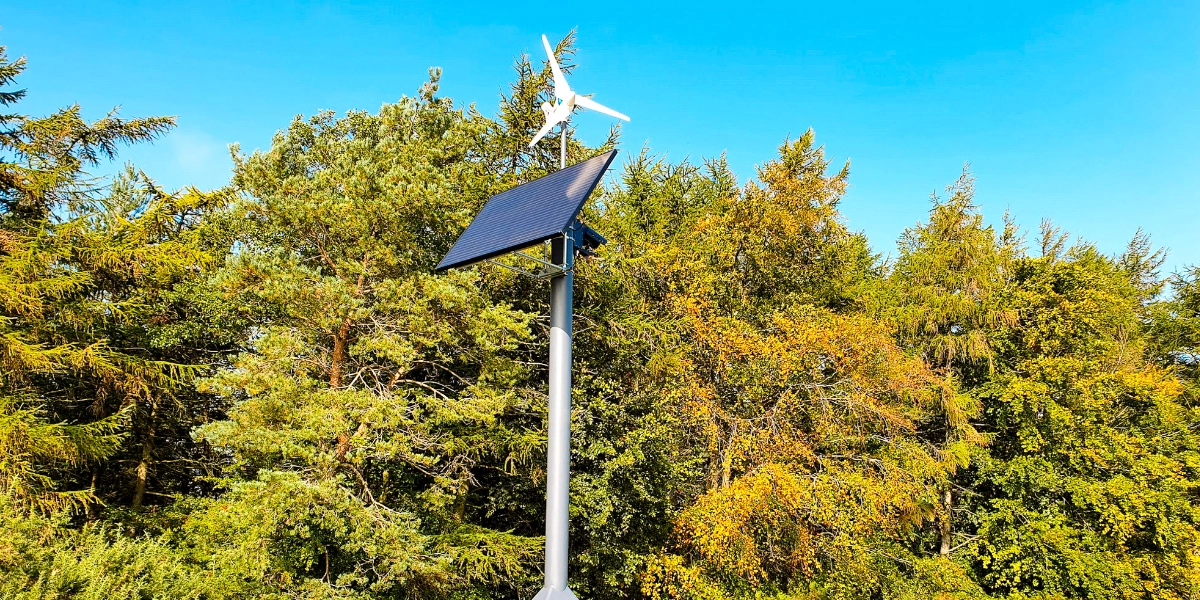
Where site conditions are suitable, combining wind and solar generation can provide a more balanced source of renewable energy. Solar generation is usually strongest during brighter periods, while wind generation may remain available overnight and during different seasonal conditions.
A hybrid system can therefore offer additional resilience for applications that require a dependable year-round power supply.
Marlec also supplies wind and solar charge controllers that manage renewable generation and help protect the battery from overcharging. Products such as the HRDi Charge Controller can control power from compatible Rutland Windchargers and solar panels while displaying generation and battery information.
Battery storage and system autonomy
Battery storage is central to most off-grid power systems. Renewable energy generated by the solar panels or windcharger is stored in the battery bank and used when the connected equipment requires it.
Correct battery sizing is essential. A battery that is too small may not support the equipment through periods of low sunlight or wind. A battery that is unnecessarily large can increase the system’s cost, weight and installation requirements.
The required capacity depends on the equipment’s daily energy use, local renewable resources and the number of days the system must operate without sufficient new generation. This period is known as battery autonomy.
Critical monitoring or communications equipment may require more autonomy than a non-essential system that can tolerate occasional interruptions. This is why Marlec assesses each application individually rather than applying a standard battery size to every project.
Off-grid power applications
Marlec works with system integrators and organisations delivering equipment across a wide range of sectors. Typical applications for remote renewable power include:
- Solar-powered CCTV and security systems
- ANPR cameras and vehicle monitoring
- Car park and asset protection
- River and water quality monitoring
- Flood detection and warning equipment
- Weather stations
- Environmental monitoring sensors
- IoT devices and telemetry equipment
- Railway and highways infrastructure
- Remote signage and variable message signs
- Telecommunications equipment
- Remote Starlink internet connections
- Seismic monitoring
- Bus shelter and public space lighting
- Temporary and rapidly deployed equipment
Every application has a different energy profile. A camera operating continuously has different requirements from a sensor that wakes at set intervals to take a measurement. Communications equipment may consume more energy when transmitting data, while lighting systems may only operate after dark or when movement is detected.
Understanding how the equipment operates can help reduce unnecessary system size and improve overall efficiency.
Supporting system integrators
Marlec partners with system integrators whose equipment depends on reliable power in remote locations. Our systems are already supporting river water monitoring stations, remote weather sensors, CCTV equipment and communications systems, including remote Starlink connections.
These partnerships are important because the renewable power supply must work as part of the wider installation. The solar panels, windchargers, batteries, controllers, monitoring equipment and communications technology must be considered together.
Marlec’s role is to understand the electrical demand and site conditions, then use our experience in small wind and solar power to help develop an appropriate solution. This allows the system integrator to focus on its specialist equipment while working with an experienced renewable energy partner.
Removing the requirement for a grid connection can increase the number of viable installation locations. It can also reduce installation time, avoid major groundworks and make a project more commercially practical.
“We are partnered with a large number of system integrators who trust Marlec power systems to run river water monitoring stations, remote weather sensors and even remote Starlink internet connections.”
Stuart James, Sales Director at Marlec Engineering
From individual products to complete systems
Marlec can supply individual products or a complete renewable power system designed around the application.
Our Rutland Windcharger range is designed, developed and manufactured at our facility in Corby, UK. The range includes models for different environments and energy requirements, from smaller battery charging applications to professional remote power systems.
Depending on the project, a Marlec system can include:
- Rutland Windchargers
- Spectra solar panels
- Wind, solar or hybrid charge controllers
- Battery storage
- Inverters
- Mounting equipment
- Cables and electrical protection
- Enclosures
- Preassembled control systems
This flexibility means that customers can source the parts they need or work with Marlec to develop a more complete plug-and-play solution.
“We can simply supply a solar panel, a Rutland Windcharger or a complete off-grid system with batteries, designed as a plug-and-play solution for straightforward installation in the field.”
Stuart James, Sales Director at Marlec Engineering
Confidence built through experience
Customer confidence in renewable energy has changed considerably.
In the past, some organisations were understandably cautious about relying on wind or solar power for important equipment. Renewable technology was less familiar, and customers often needed reassurance that it could provide dependable power.
Today, solar panels are visible on homes, factories and commercial buildings throughout the UK. Renewable-powered road signs, lighting systems and monitoring stations have also become familiar parts of public infrastructure.
Rather than simply explaining why renewable energy is viable, Marlec can now work alongside customers as a technical partner. We help them understand their power requirements, assess the application and select an appropriate wind, solar or hybrid solution.
This approach is supported by experience dating back to 1978. Marlec is the world’s longest-standing manufacturer of micro wind turbines, with more than 120,000 Rutland Windchargers sold worldwide.
Continuing to develop off-grid energy solutions
The technology used for remote monitoring will continue to evolve, and the power systems behind it must develop too.
Marlec continues to design, manufacture and supply renewable energy products in response to changing customer requirements. This includes the continued development of the Rutland Windcharger range, Spectra solar technology, charge controllers and complete off-grid power systems.
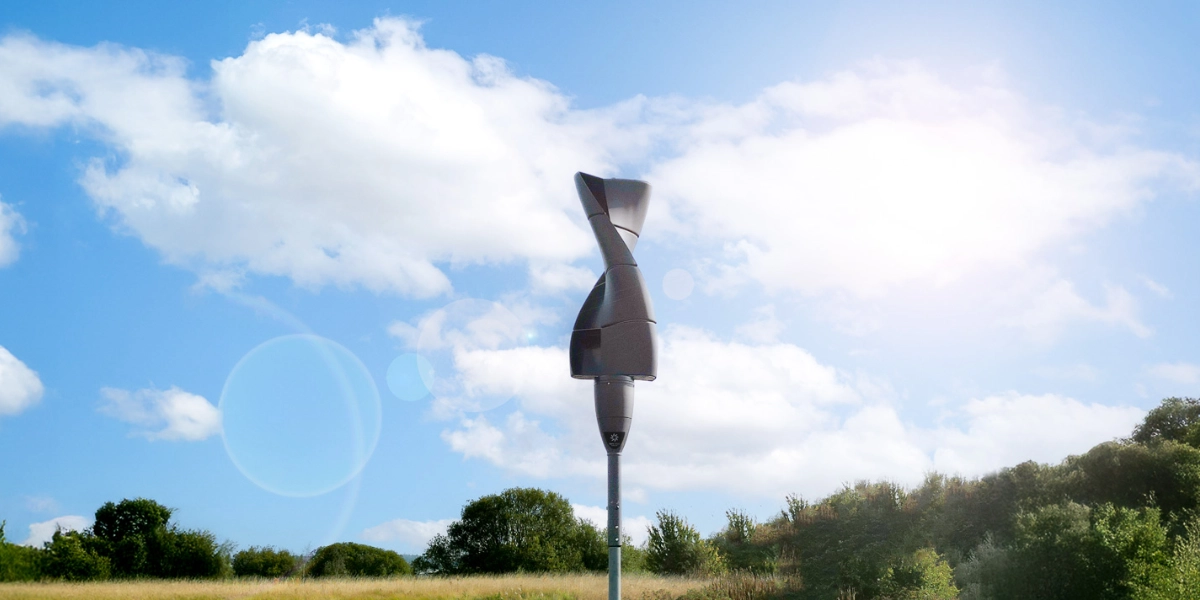
A new design of the Green Column system is also in development, with its launch planned for Q4. Green Column provides an integrated wind and solar powered solution for lighting in locations where grid electricity is unavailable or costly to install.
For us, innovation is not only about launching new products. It is about understanding how customer requirements are changing and providing practical power solutions for the applications ahead.
Frequently asked questions about off-grid power systems
Can CCTV operate completely off-grid?
Yes, provided the complete system is correctly designed. The power consumption of the cameras, recording equipment, routers, transmitters and any other connected devices must be included in the system calculation.
How is an off-grid power system sized?
Sizing starts with the equipment’s voltage, daily energy use, peak demand and operating hours. The installation location, seasonal sunlight, wind conditions and required battery autonomy must also be considered.
Can solar power support equipment throughout a UK winter?
Solar power can support year-round applications when the panels and batteries are designed around winter conditions. Some sites may benefit from hybrid wind and solar generation to provide additional energy during periods of limited daylight.
When should wind and solar power be combined?
A hybrid system may be suitable where wind and solar resources complement each other or where the application requires greater year-round generation. The decision should be based on the site conditions and the equipment’s energy demand.
Can Marlec supply a complete plug-and-play system?
Yes. Marlec can supply individual renewable energy products or help develop a complete off-grid power system incorporating generation, battery storage and control equipment. The exact scope will depend on the project and installation requirements.
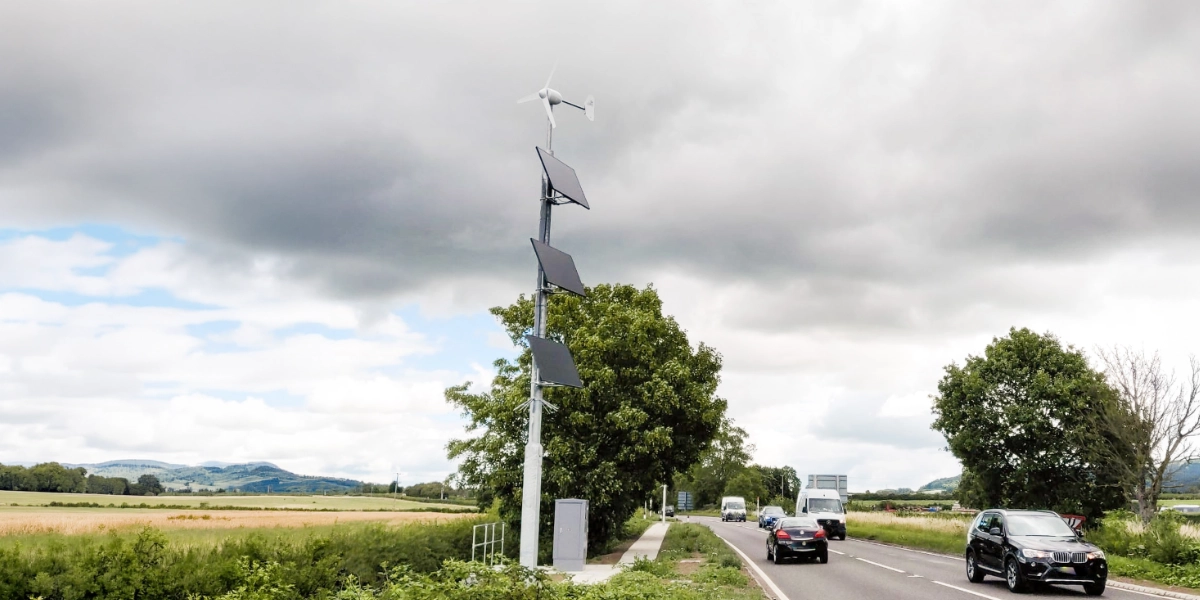
The future of remote monitoring is increasingly off-grid
Demand for live data from remote locations is unlikely to slow down. Organisations want greater visibility of their assets, infrastructure and surrounding environments. This will continue to increase the use of cameras, sensors, telemetry and communications equipment in places where mains electricity is unavailable.
At the same time, this equipment is becoming more capable and more energy efficient. Together, these developments create a strong case for off-grid renewable power.
Marlec brings together UK-manufactured Rutland Windchargers, high-efficiency solar technology and decades of renewable energy experience to create systems designed around real applications.
“Marlec is the one-stop shop for practical, reliable and cutting-edge renewable power systems.”
Stuart James, Sales Director at Marlec Engineering
Whether the requirement is for a solar panel, a Rutland Windcharger, a hybrid renewable system or a complete plug-and-play power solution, our focus remains the same: practical and reliable renewable energy designed around the customer’s application.
Planning a remote monitoring, CCTV, environmental sensing or communications project?
Speak to the Marlec team about your equipment, proposed location and energy requirements. We can help assess the application and identify a suitable off-grid renewable power solution.
Telephone: +44 (0)1536 201588
Email: [email protected]