Do I Need A Charge Controller?
A Rutland charge controller fitted to your system will ensure:
- that the batteries do not get overcharged when full which would damage them and shorten their life
- that the batteries go through charging regimes that help to maintain them in good condition and last longer, this is called multi-stage charging
- and that the system can operate automatically, so if the batteries become fully charged in your absence they will not be overcharged
All Rutland windcharger controllers include LED’s for simple indication of the system’s operation and a shutdown switch, advanced models include LCD’s to indicate battery voltage, charge current and other features.
The Rutland 1200 and FM1803-2 Windchargers are supplied with their own dedicated Controllers therefore no additional items are required.
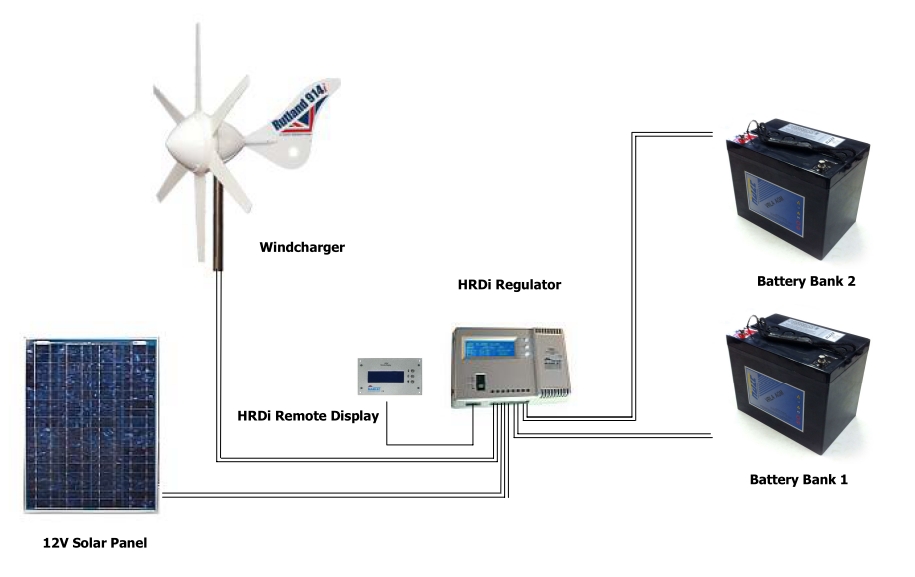
Types of Controllers
Marlec has a range of regulators designed for use with wind, solar or hybrid systems (combined wind & solar).
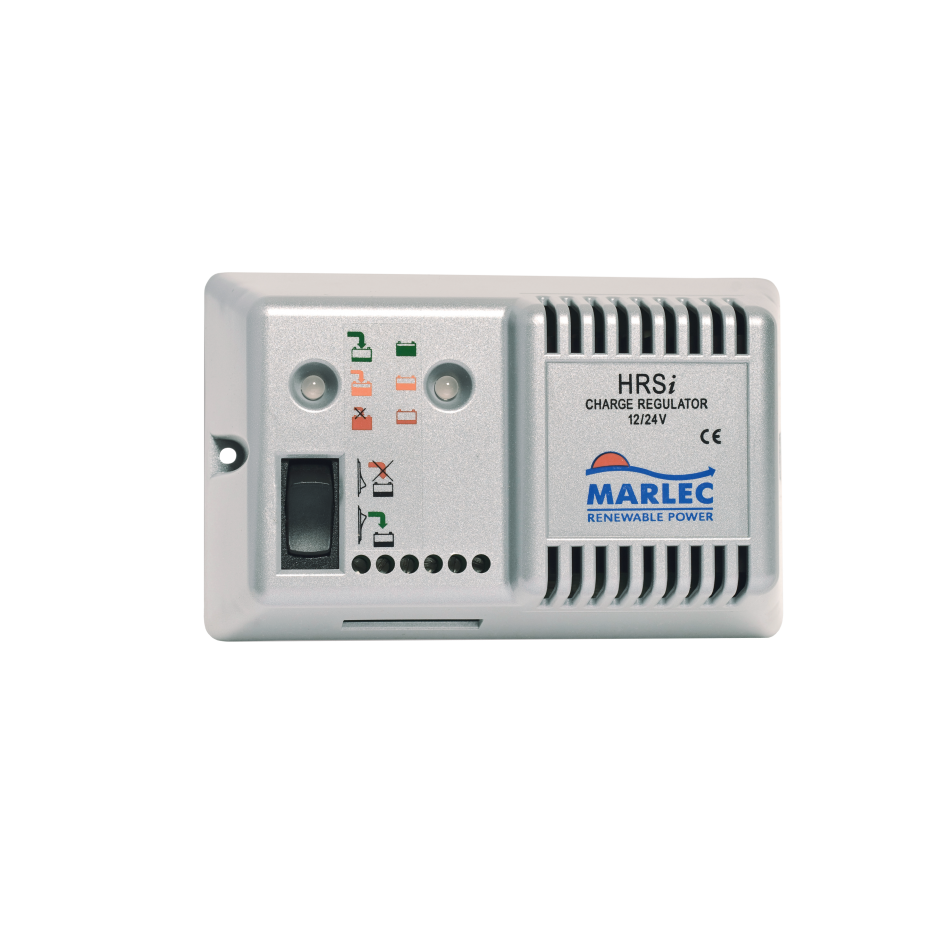
HRSi Controller
(Single Battery Controller)
Suitable for the following Windchargers:
- 504 + 160W maximum peak rated solar panel
- 913 + 160W maximum peak rated solar panel
- 910-4 + 160W maximum peak rated solar panel
- 914i +160W maximum peak rated solar panel
Can be used with 12V or 24V battery banks by auto-setting upon connection.
Packed Dimensions: 160 x 110 x 60 mm 255g
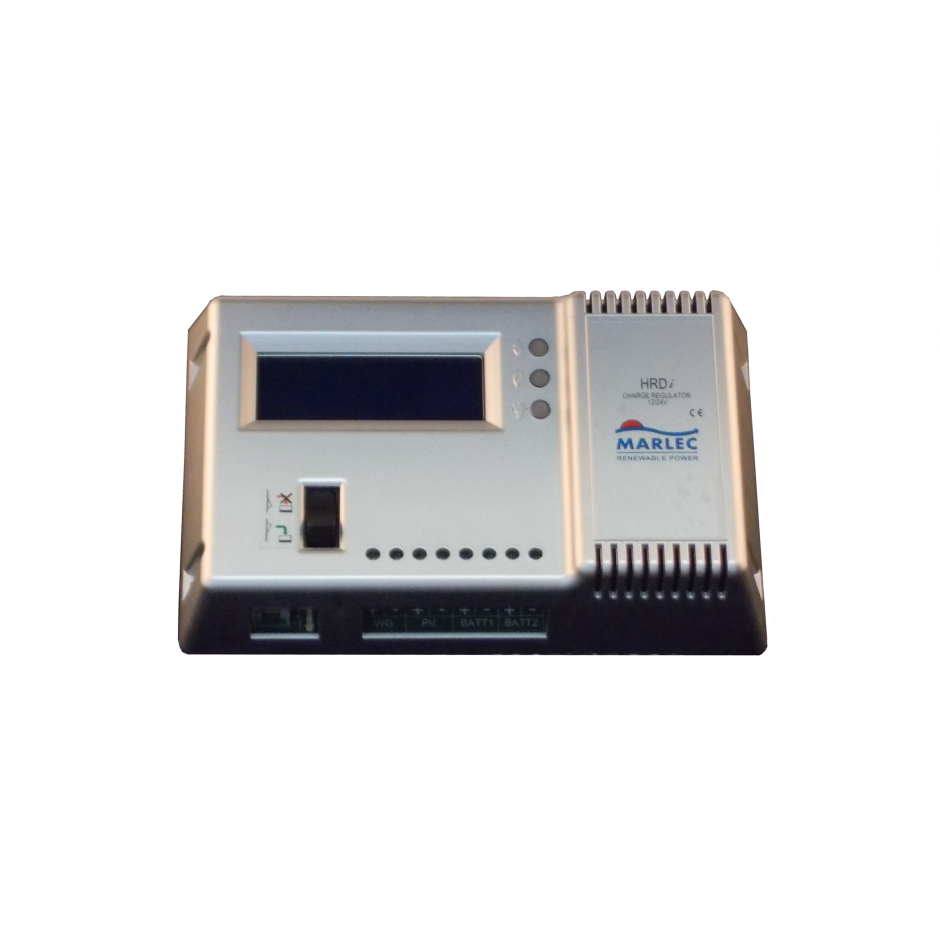
HRDi Controller
(Dual Battery Controller)
Suitable for the following Windchargers:
- 504 + 160W maximum peak rated solar panel
- 913 + 160W maximum peak rated solar panel
- 910-4 + 160W maximum peak rated solar panel
- 914i +160W maximum peak rated solar panel
Can be used with 12V or 24V battery banks by auto-setting upon connection.
Packed Dimensions: 230mm x 150mm x 60mm 60g
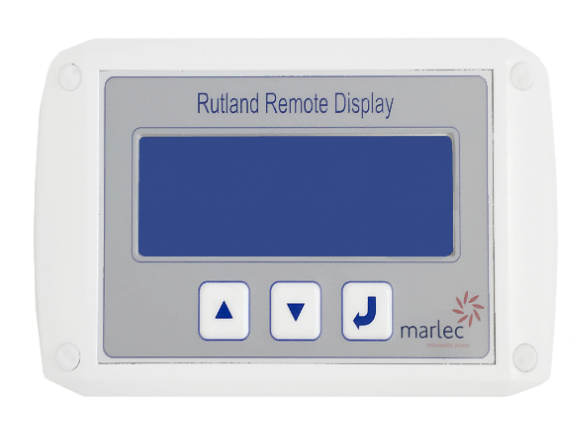
HRDi Remote Display
View the HRDi digital display at a convenient location such as a chart table on board. Using the push buttons select the screens available, change settings and shutdown the charge sources; wind turbine and solar panels.
Supplied with a 3m serial cable and back box for either surface mounting or prepare a cut out and recess for flush fitting.
Surface Mount: 125x75x50mm 203g
Recess Mount: 125x75x9mm 132g Cut out: 100x62mm
Packaged: 155x145x60mm 320g
Technical Features
Pulse Width Modulation (PWM) (regulation finely controls voltage regulation, monitoring battery voltage to prevent overcharge)
As peak voltages are reached the input charge from the wind & solar chargers is tapered, gradually reducing from bulk charging to float stage level. This feature gradually reduces the speed of the turbine to an eventual “idle” thus extending the working life of the windcharger. As the battery discharges the wind turbine responds by increasing speed to deliver more power. Solar power is also tapered in the same way.
Microcontroller (intelligently controls multi-stage charging from bulk through to float phase)
This feature ensures that batteries are optimally charged, especially when unattended. Multi-stage charge control delivers appropriate charge levels required to ensure your batteries get the maximum power they are able to retain and remain float charged ready for use.
Temperature compensation (automatically adjusts the Voltage settings of the regulator to take account of varying temperatures).
Hot and cold ambient temperatures affect battery voltages. This feature ensures maximum charging efficiency wherever you are in the world. Voltage settings @ 25°C for nominal 12V and 24V are: Float Voltage: 13.8V / 27.6V Bulk Voltage: 14.4V / 28.8V
This feature is built into the HRSi and HRDi.
The HRDi also has an optional external sensor included.
Manual shutdown switch (allows the user to stop the wind & solar chargers if required).
The windcharger slows to an “idle” in this mode and no power is delivered to the battery. This enables the user to safely brake the turbine.
User voltage programme feature
Enables the user to reset voltage cut in levels. Requires a variable DC power supply
Automatic voltage detection (12V or 24V systems)
Batteries must be connected first for correct auto detection
Built in blocking diode
This avoids conflict with other charging sources to the same battery eg engine charging Solar panels must be fitted with appropriately rated diodes to prevent reverse current when shaded